
API Revenue OS / Platform — deploy next to Kong, WSO2, or Apigee; not a gateway replacement.
Revenue Infrastructure
Finno: API Revenue OS for APIs
Finno is the API Revenue OS that deploys alongside your ESB or API gateway. It unifies metering, billing, and double-entry accounting on the consumption path — every request charged and recorded before the response returns.
Built in Rust · Raft-replicated · Self-hosted on your cloud
< 250 µs
System overhead per request
< 300 ms
Automatic cluster failover
3
Billing models on one API key
6
Double-entry account types
5
Built-in financial reports
23
Revenue anomaly detectors
10k–50k
Requests/sec per cluster
What is Finno?
API Revenue OS — not an API gateway
Finno is not a typical API gateway. It is the API Revenue OS you deploy alongside your existing ESB or gateway — unifying metering, billing, and double-entry accounting on the consumption path.
Instead of Kafka + Stripe + custom billing + a reconciliation team (while keeping your gateway), one revenue platform on your own infrastructure.
Every API request is charged and recorded before the response returns — revenue you can explain, not reconstruct.
Kong + Metronome + Stripe Billing + banking ledger in one product
Every digital action creates value.
- Every unit of value deserves accountability.
- Every request should be measured, authorized, charged, and recorded the moment it happens.
We believe revenue should never depend on reconciliation jobs, missing events, or delayed accounting. Finno exists to make digital commerce trustworthy by design — not just billing. Not just accounting. The revenue infrastructure for the API economy.
Read our story The billing gap
Your gateway serves requests. Your books catch up later.
Requests are served. Events are emitted. Logs are collected. Bills are generated hours or days later. Some revenue is lost. Some usage is disputed. Some transactions are never reconciled. The larger your platform grows, the larger the gap between what happened and what was charged.
Typical stack
Gateway →Events →Billing →Accounting
- Billing gap
- Nightly reconciliation
- Lost revenue
- Customer disputes
Finno
Reserve →Upstream →Finalize →Ledger
- No gap
- No reconciliation
- No lost charges
- Instant audit trail
Why executives care
Revenue you can explain — not reconstruct
Finno is not an API gateway or ESB replacement. It is the API Revenue OS you deploy next to Kong, WSO2, Apigee, and similar stacks — the financial layer where digital consumption becomes accountable revenue.
Trust built into systems
Every charge is explainable. Every balance is traceable. Every transaction is auditable — before the response returns, not in a spreadsheet assembled next month.
Revenue born at delivery
Funds are reserved before upstream runs. Usage is finalized from the response. The ledger posts atomically. Your CFO sees reality in real time.
Financial correctness as infrastructure
Six double-entry accounts with an algebraic invariant enforced after every command. Books balance by construction — not by reconciliation jobs.
Traditional competitors by category
API Revenue OS


API monetization


Usage-based billing


Subscription billing


Comparison table
| Capability | Typical stack Kong + Metronome + Stripe + custom ledger | Finno |
|---|---|---|
| Architecture | Separate gateway, events, billing, accounting | Proxy + ledger in one system |
| When revenue is recorded | Hours or days later | Before the response returns |
| Nightly reconciliation | Required | Not needed |
| Double-entry accounting | Custom build or export | Six built-in accounts |
| Reserve funds before upstream | Rarely | Always |
| Billing gap | Yes | No |
| Lost billing events | Possible | Prevented |
| Self-hosted / air-gapped | Limited | Full support |
| Audit-ready financial reports | Separate integration | Built in |
| Revenue anomaly detection | Separate monitoring / manual reports | 23 built-in background checks |
| Machine integration clients | Scripts sharing operator sessions | HMAC credentials with scoped reach |
| Corrective adjustments | Spreadsheets / side ledger | Maker/checker on the real books |
| Billing disputes | Tickets and manual matching | Claim file + full difference decomposition |
Finno's key differentiators
Proxy + ledger in one system
Competitors: Gateway → Events → Billing → Accounting. Finno: Reserve → Upstream → Finalize — no gap, no reconciliation, no lost events.
Built-in double-entry accounting
Most competitors track balances. Finno maintains six accounts — Float, Receivable, Wallet, Owed, Deferred Revenue, Revenue — audit-ready from day one.
Real-time spend authorization
Funds are reserved and credit verified before upstream runs. The financial exposure of post-billing systems disappears.
Self-hosted & government-ready
On-premise, air-gapped, and national operators — where SaaS competitors cannot go.
Built-in revenue anomaly detection
23 background checks on ledger, payments, rollups, and gateway telemetry — from accounting integrity to settlement failures and overdue invoices. Every finding ships with evidence and a recommended action, with zero hot-path overhead.
Integrations, adjustments & disputes
Machine credentials for ERP, maker/checker corrective adjustments, and claim-file billing disputes — on the same books, not a side spreadsheet.
The hidden competitor: your internal team
The biggest competitor is engineering teams building Kafka + Stripe + custom billing + a reconciliation team — while keeping Kong or WSO2 for traffic. Finno replaces the monetization stack, not your gateway.
Stop building monetization infrastructure. Deploy Finno next to your gateway.
Anomaly detection
Catch revenue leaks before the next invoice
Finno doesn't just charge requests — 23 background checks continuously scan your ledger, payments, settlements, usage rollups, and gateway telemetry. Every finding ships with evidence, money at risk, and a recommended next step — not a vague alert.
Zero hot-path overhead
The gateway emits facts; detection runs in the dashboard API against Postgres and gateway /stats. Request overhead stays under 250 µs.
23 checks: 17 deterministic + 6 statistical
From ledger balance to settlement failures, usage-rollup drift, overdue invoices, error floods, and survival mode — transparent rules first; statistical detectors calibrate in shadow before they alert.
Actionable findings, not log lines
Each item includes severity, money at risk, auditable evidence, an owner role (engineering / finance / SRE), and a concrete next step. Episodes stay open until acknowledged or resolved.
Integrations & dispute resolution
Connect systems, correct balances, close disputes
Three cold-path capabilities: machine credentials for ERP and partner systems, maker/checker corrective adjustments, and claim-file billing disputes — without touching the metering hot path.
Integration clients
HMAC-signed credentials for the dashboard API, default-deny scopes, and virtual services for work that happens outside Finno — no sharing of an operator’s browser session.
Corrective adjustments
Goodwill credits, SLA refunds, rate corrections, and opening balances. One operator proposes; a different one approves — separately for consumers and providers.
Billing disputes
Consumers or providers open a case, upload a claim CSV, and Finno places every micro of difference in a named bucket. Resolution settles through the same maker/checker adjustment rails.
Who it's for
Built for platforms where every unit matters
From AI resellers to enterprise SaaS — when consumption is your product, revenue infrastructure is your moat.
AI & LLM platforms
Sell inference by the token with margins you can defend. Every call metered, charged, and visible — before your customer disputes the invoice.
API resellers & marketplaces
Buy upstream capacity wholesale, sell at markup, settle with providers automatically. One system from proxy to payout.
Usage-based SaaS
Give finance an audit trail they trust and executives dashboards they believe — without a billing team rebuilding reports every quarter.
Global operators
Multi-currency wallets, localized dashboards, and payment gateways for every market — revenue infrastructure that scales with you.
Blog
Latest from the blog
API billing, revenue infrastructure architecture, and engineering insights from the Finno team.
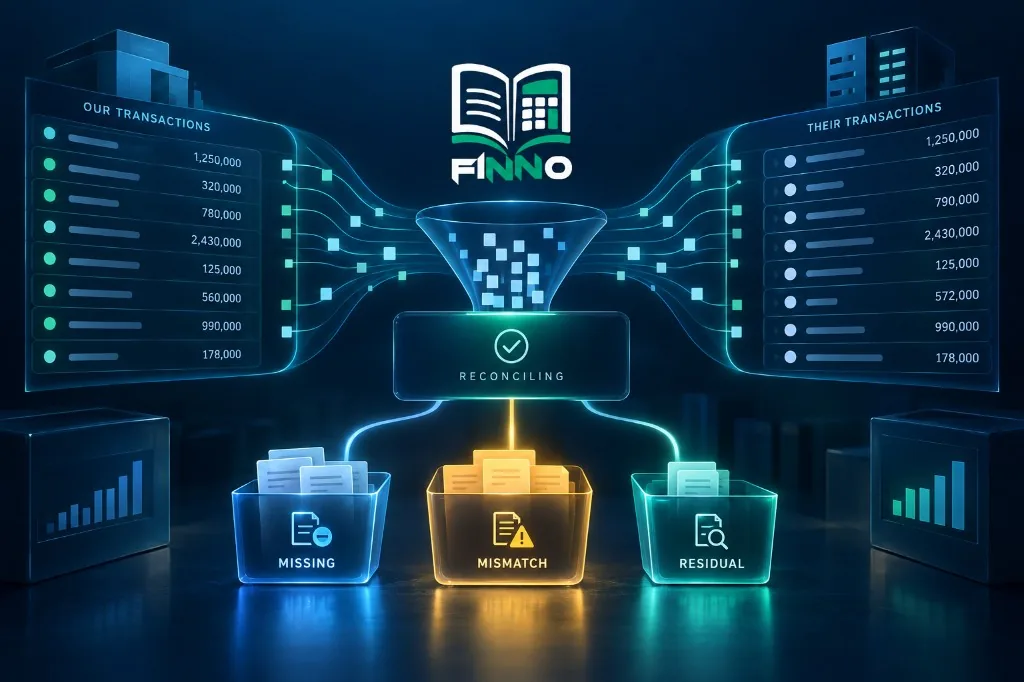
Billing Disputes: When Someone Says Our Numbers Are Wrong
Consumers and providers raise disputes against invoices, settlements, or periods; upload their own CSV; and Finno reconciles every micro into an additive decomposition — then settles with maker/checker adjustments.
Read article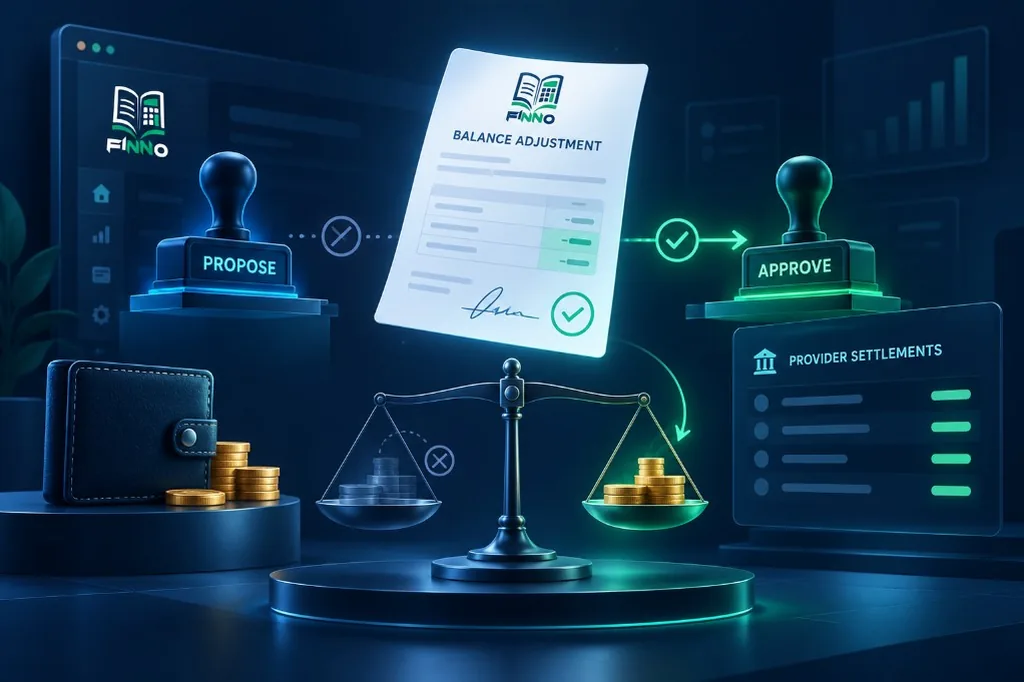
Corrective Adjustments: Signed Money Corrections With Maker/Checker Built In
Goodwill credits, SLA breach refunds, rate corrections, opening balances, and dispute settlements — Finno’s adjustments move consumer and provider money with two operators, never one.
Read article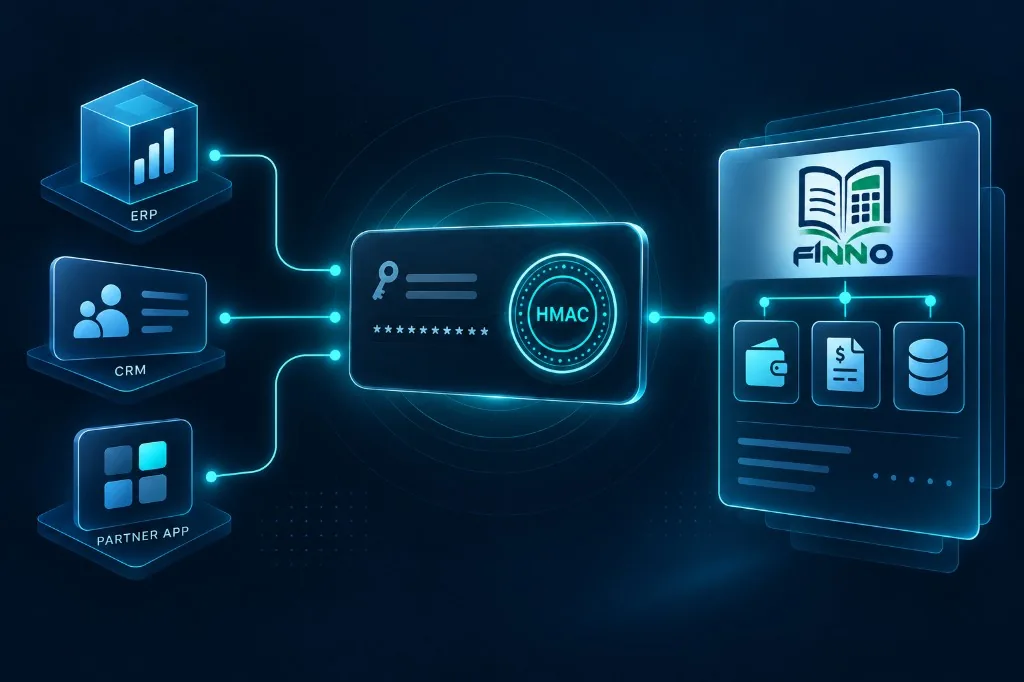
Integration Clients: Let Your Systems Drive Finno Without Opening the Hot Path
Machine credentials for ERP, CRM, and partner platforms — HMAC-signed dashboard API calls, scoped reach, and virtual services so Finno can meter work that happens outside the gateway.
Read article Questions
Frequently asked questions
What teams ask before they evaluate Finno.
What exactly is Finno?
Finno is a self-hosted API Revenue OS for metered API businesses. It deploys alongside your existing ESB or API gateway — Kong, WSO2, Apigee, and others — and unifies real-time usage metering, billing (prepaid wallet, postpaid credit, and quota subscriptions), and a double-entry financial ledger on the consumption path. Finno is not a gateway replacement.
How is Finno different from Kong, Apigee, or Stripe Billing?
API gateways and ESBs like Kong and WSO2 route traffic and enforce policies but don't bill in real time. Stripe Billing and Metronome track usage but don't sit on the request path or enforce funds before the upstream call. Finno is the API Revenue OS that deploys next to your gateway: it meters, authorizes, and charges in the same atomic flow — so revenue is recorded before the response returns, not reconstructed from logs hours later.
Is Finno production-ready?
Yes — Finno is engineered for production from day one. It's written in Rust, runs as a 3–5 node Raft-replicated cluster with sub-300ms automatic failover, and adds under 250µs of overhead per request in benchmarks. TLS 1.3, OIDC/SSO, structured tracing logs, and Prometheus metrics are built in.
How is Finno priced?
Finno is licensed as enterprise platform software, not a per-request SaaS tax — so your unit economics improve as you scale. Pricing is tailored to your traffic profile, billing models, and SLA tier; most teams receive a proposal within 48 hours of a discovery call.
Can I self-host Finno on my own cloud?
Yes — that's the primary deployment model. A typical cluster is 3–5 Linux nodes, one PostgreSQL instance, and a load balancer on AWS, GCP, Azure, or on-prem. You keep your data, control your spend, and audit the system end-to-end. A fully managed option is also available.
What payment gateways does Finno support?
Stripe is built in. The IPG (Internet Payment Gateway) interface is extensible — you can plug in additional gateways for regional markets. Fulfillment is webhook-verified so charges only post to the ledger once payment is confirmed.
How quickly can we evaluate Finno?
A typical technical evaluation takes 1–2 weeks: share your traffic profile and billing model, we propose a cluster layout and integration path, then run a sandbox against representative traffic. Talk to us via the contact page to start.
Does Finno detect revenue problems automatically?
Yes. Twenty-three background detectors (17 deterministic + 6 statistical) continuously scan your ledger, payments, settlements, usage rollups, and gateway telemetry — unbalanced journal entries, settlement failures, rollup drift, stuck pending requests, overdue invoices, upstream errors, and more. Findings are ranked by money at risk and include auditable evidence plus a recommended next step. Detection runs off the request hot path, so billing latency stays under 250 µs.
What happens when an upstream provider runs out of quota?
Finno can spill traffic to ordered fallback services while billing the consumer at the primary service price and settling the provider that actually delivered. Consumer-specific limits are never bypassed.
Can ERP systems and partners talk to Finno without a browser login?
Yes. Integration clients are HMAC-signed machine credentials into the same dashboard API routes the panel uses — with default-deny scopes and optional consumer reach limits. Virtual services let a partner report units for work delivered outside Finno while the ledger still reserves and finalizes on the hot path. Corrective adjustments (maker/checker) and claim-file billing disputes handle the exceptions metering alone cannot express.
Your revenue is safe with Finno
Stop reconstructing revenue after the fact. Deploy revenue infrastructure on your own stack — and charge for every unit you deliver.